
Main & Cordova Social Housing
CLIENT:
MAC Development & Housing Society
LOCATION:
Vancouver, BC on the traditional territory of the xʷməθkʷəy̓ əm (Musqueam), Sḵwx̱ wú7mesh (Squamish), and səl̓ilwətaɬ (Tsleil-Waututh) Peoples.
COMPLETION:
Under Construction
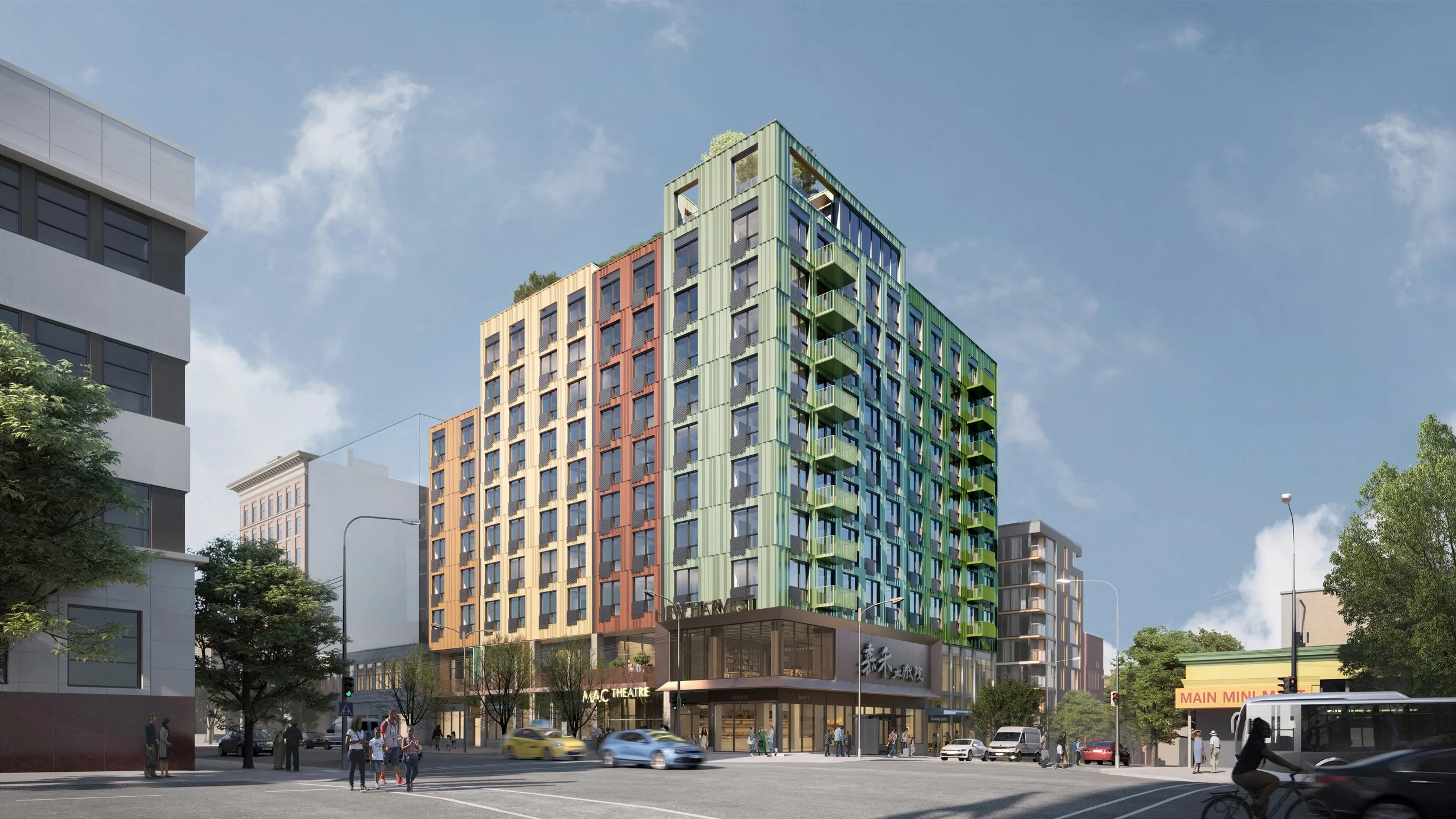
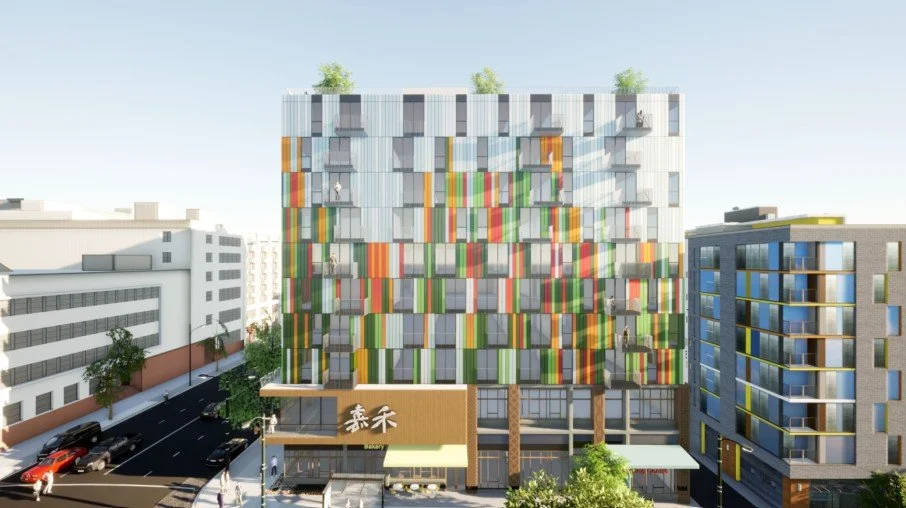
An 11-storey mixed-use building is taking shape at Main and Cordova in Vancouver's Downtown Eastside — on the traditional territory of the xʷməθkʷəy̓əm (Musqueam), Sḵwx̱wú7mesh (Squamish), and səl̓ilwətaɬ (Tsleil-Waututh) Peoples.
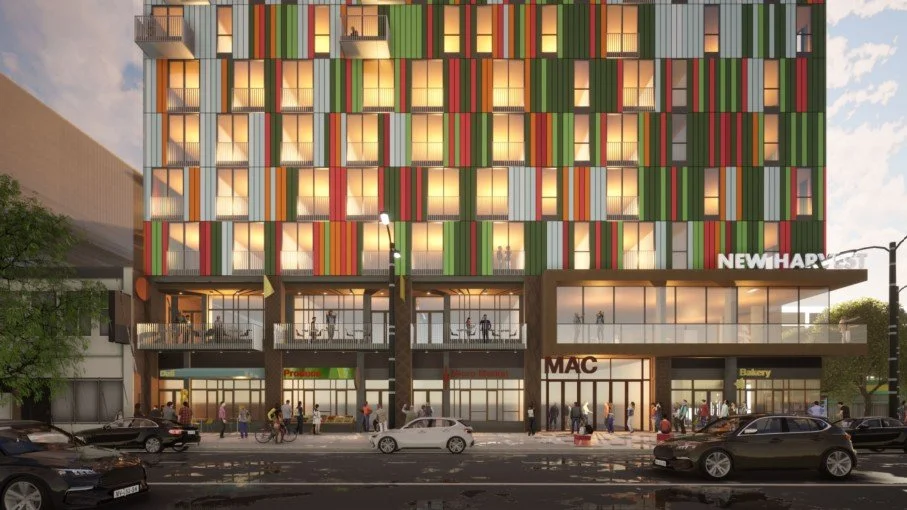
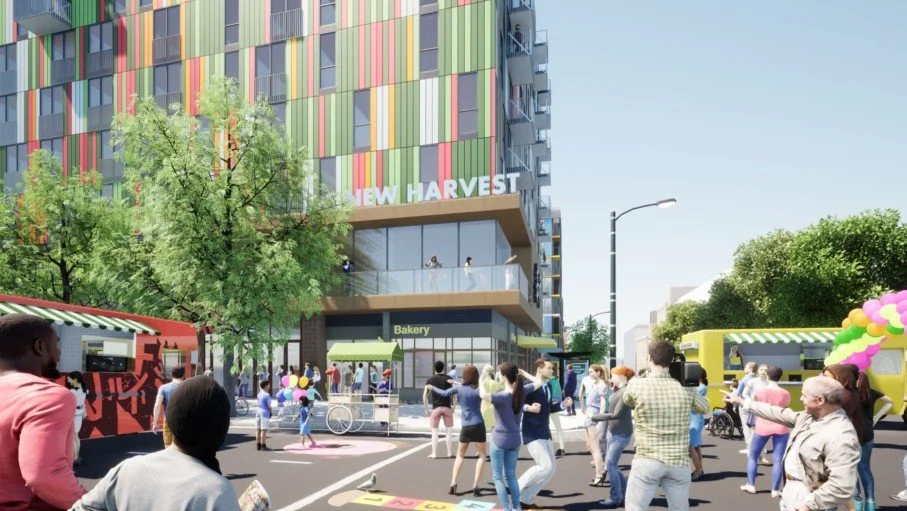
The building will house intergenerational families, seniors, Elders, and people with disabilities. Large family units accommodate multigenerational living. Ground-floor retail spaces, a learning centre, shared community theatre, and an 11th-floor gathering space anchor the building's role as neighbourhood infrastructure.
Developed by a team including a civic historian and an Indigenous Consultant, Sniw̓ Consultants, the function and appearance of the building aim to celebrate the histories of Indigenous, Chinese-Canadian, Japanese-Canadian and other racialized groups who have long histories in the Downtown Eastside neighbourhood and are expected to be represented among the future residents of the building. The project takes a living heritage conservation approach that honours the past while strengthening community continuity.
MAC Development & Housing Society — a partnership of Lu'ma Native BCH Housing Society and Dogwood Holdings Society (Affordable Housing Society), with the support of Frog Hollow Neighbourhood House — stepped in to complete design, financing, and operations. Together, these organizations bring over a century of experience in social services, multicultural programming, and affordable housing.
When tender results showed construction costs exceeding financial viability, Terra guided MAC through a redesign from mass timber to concrete construction — preserving cultural expression and design intent, including the large family posts inside and outside the building, while achieving the cost savings needed to proceed.
Projects of this scale and ambition require multiple funding partners, including BC Housing, BC Builds, CMHC Affordable Housing Fund, and the University of British Columbia Learning Exchange, each with different timelines, requirements, and approval processes. Terra worked alongside MAC to secure commitments across government programs and funders — coordinating applications, aligning pro forma, and navigating the compliance requirements that turn conceptual funding into construction-ready commitments.
Without this coordination, projects stall. With it, shovels go in the ground.